

Isan Willems | Marijn van der Wekken | Boaz de Rijke | Fabian Molenaar
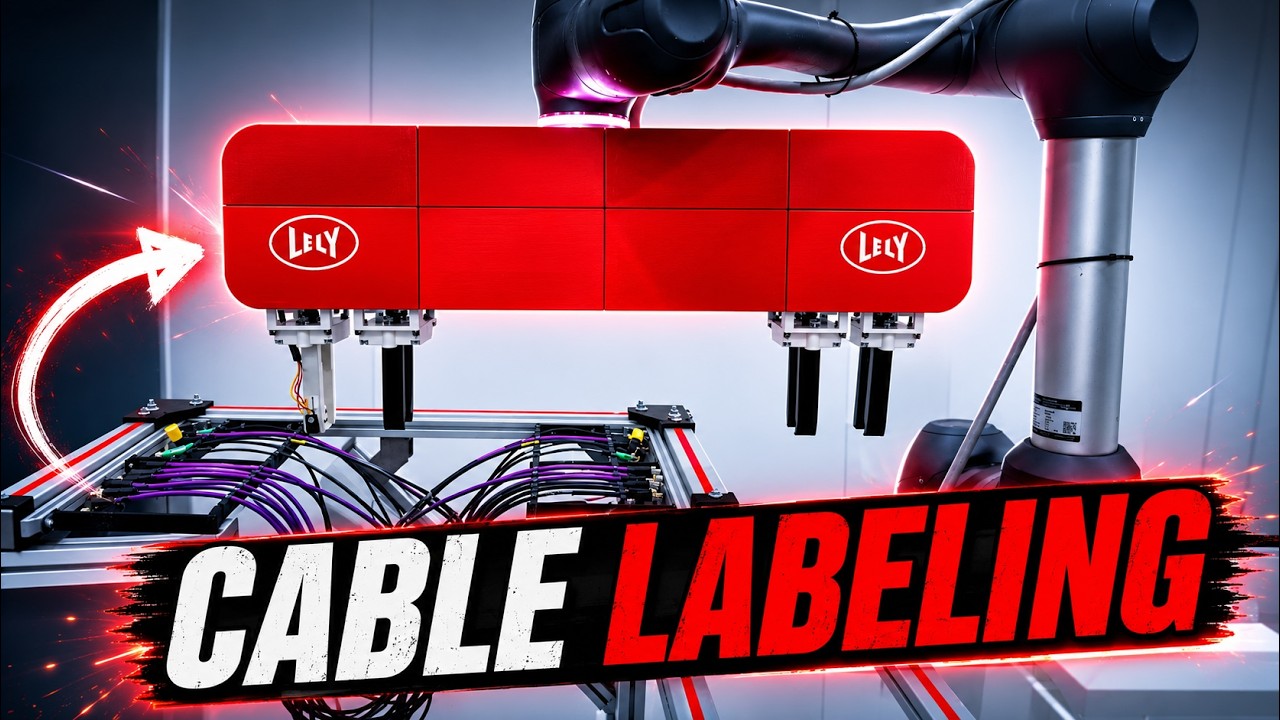
LELY INDUSTRIES ANNOUNCES ‘ROBOLABEL’ SYSTEM TO ENABLE PRODUCTION OPERATORS TO ELIMINATE MANUAL CABLE ASSEMBLY.
Revolutionary automated cable handling eliminates manual precision stress and streamlines the sorting process for complex dairy equipment assembly.
July 30, 2026
Lely Industries today unveiled the “RoboLabel” initiative, a smart automation system designed to transform how electrical wiring is processed within our Maassluis facility. By integrating robotics with our existing labeling technology, the project aims to support our production team in managing the vast variety of cable lengths and diameters used in Lely robots. This system handles the delicate positioning and sorting tasks, allowing our skilled operators to focus on high-level assembly quality.
Currently, our operators face three significant pain points: First, the high physical and mental strain of manually holding different-sized cables in a precise, “millimeter-perfect” position within the labeling machine, which leads to fatigue. Second, the high risk of human error where cables are placed in the wrong crates, causing delays further down the assembly line. Third, the “bottleneck” effect created by the sheer variety of cable diameters, which forces operators to constantly adjust their pace and focus, slowing down the overall production flow.
The RoboLabel system elegantly solves these issues by utilizing an adaptive robotic arm that automatically recognizes cable diameter and secures it in the exact labeling position every time. It eliminates manual holding entirely and uses an intelligent sensor array to automatically divert finished cables into the correct crates. This ensures 100% sorting accuracy and removes the physical strain from the operator.
To start, an operator simply places a bundle of cables onto the intake tray. The system’s vision sensors identify the cable type, the robotic gripper adjusts its pressure based on the diameter, and the cable is fed into the labeling machine. Once labeled, the system scans the barcode and a conveyor drops the cable into the designated crate for that specific model, requiring zero manual intervention during the cycle.
“Before RoboLabel, my shift was spent squinting at tiny labels and trying to hold thin wires perfectly still for hours; it was exhausting and easy to make a mistake,” says an Assembly Lead at Lely. “Now, the machine handles the precision work and the sorting. I can manage the flow of the entire line without worrying about a cable ending up in the wrong robot.”