

Boaz de Rijke | Isan Willems | Marijn van der Wekken | Ana Rueda
HORDIJK EPS ANNOUNCES ROBOTIC PLATE PLACEMENT SYSTEM TO ENABLE MORE CONSISTENT AND EFFICIENT UNDERFLOOR HEATING PANEL PRODUCTION
Client: Hordijk EPS
Location: Delft
Date: 13-04-2026
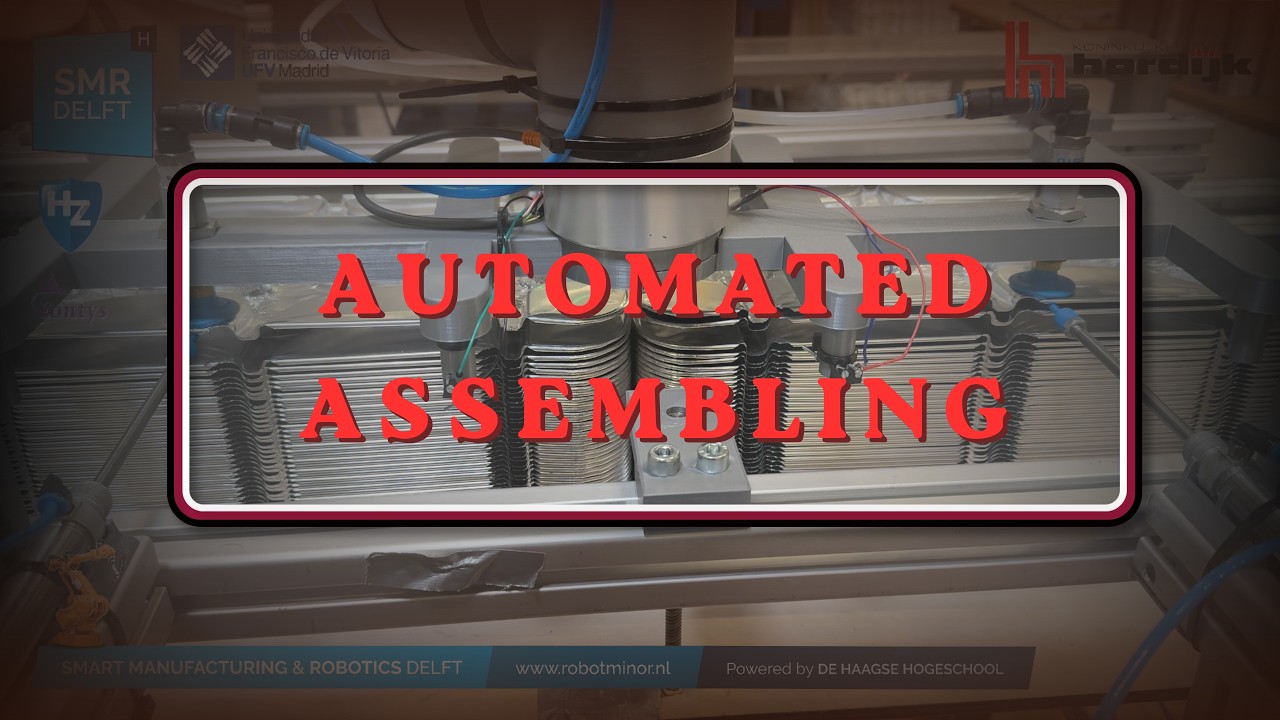
Hordijk EPS is developing a new automation concept for the production of underfloor heating insulation panels. The project focuses on automating the handling and placement of aluminum plates onto EPS sheets before the pressing stage. By combining robotic manipulation, plate verification and camera-based quality control, the system is designed to reduce repetitive manual work, improve placement consistency and support a more reliable production flow.
Current Situation
Currently, a worker manually places the aluminum sheets onto the EPS panel before it goes into the press. This process requires speed and very precise alignment, two factors that can be affected by the repetitive nature of the task and the physical fatigue it causes over time. Furthermore, assigning an operator to this task means using labor that could be put to better use in other areas of the company.
Problem
Repetitive manual handling
The current process requires repeated manual movement and positioning of parts. This is labour-intensive, monotonous and physically demanding over long production runs.
Risk of incorrect plate placement
The aluminum plates must be placed accurately on the EPS sheet before the product enters the press. If a plate is tilted, misplaced or missing, the quality of the final panel can be affected.
Unreliable plate pickup from the stack
When picking aluminum plates from a stack, there is a risk that two plates stick together. This can lead to incorrect placement and process interruptions further down the line.
Need for reliable quality control before pressing
Before the product can continue to the press, it must be verified that all plates are present and correctly positioned. Without an automatic control step, errors may only be detected too late in the process.
Solution
The proposed solution involves incorporating a robotic arm to automate the entire process. First, the arm moves the EPS panel to the area where the aluminum plates are located. Next, using a suction system, it picks up the aluminum plates and places them on the EPS panel, ensuring that only one plate is picked up at a time and that they are properly aligned without tilting. Once in place, a quality control check is performed using a camera and a machine learning model to verify that all the aluminum plates are properly positioned and that none are missing before the part moves to the press.
How the System Works
- EPS plate positioning
The robotic arm first drags the EPS plate and positions it in front of the stack containing the aluminum plates.
- Aluminum plate pick-up
Using suction cups, the robot picks up the aluminum plates from the stack. During this step, the system must ensure that the plate remains straight and is not tilted.
- Double-plate prevention during handling
Because aluminum plates may stick together in the stack, the system makes sure that two plates are not picked up together before placement onto the EPS sheet.
- Plate placement on the EPS plate
The robot places the aluminum plates onto the EPS plate in the required positions, preparing the product for the next manufacturing stage.
- Laser verification
After placement, a laser system verifies that two plates have not been placed in the same quadrant. This acts as an additional check before the product moves on.
- Machine-learning quality control
A camera takes a photo of the EPS plate with the placed aluminum parts. This image is analyzed by a machine learning model that checks whether all aluminum plates are present and correctly positioned.
- Transfer to the press machine
If the inspection confirms that the placement is correct and no plates are missing, the product proceeds to the press machine for final bonding.
Conclusion
With this concept, Hordijk EPS takes an important step toward automating a repetitive and precision-critical part of its production process. The project does not only focus on robotic pick-and-place, but on creating a complete control chain that combines handling, verification and quality inspection before pressing. In this way, the system contributes to a more efficient, more consistent and more scalable production process for underfloor heating insulation panels.